
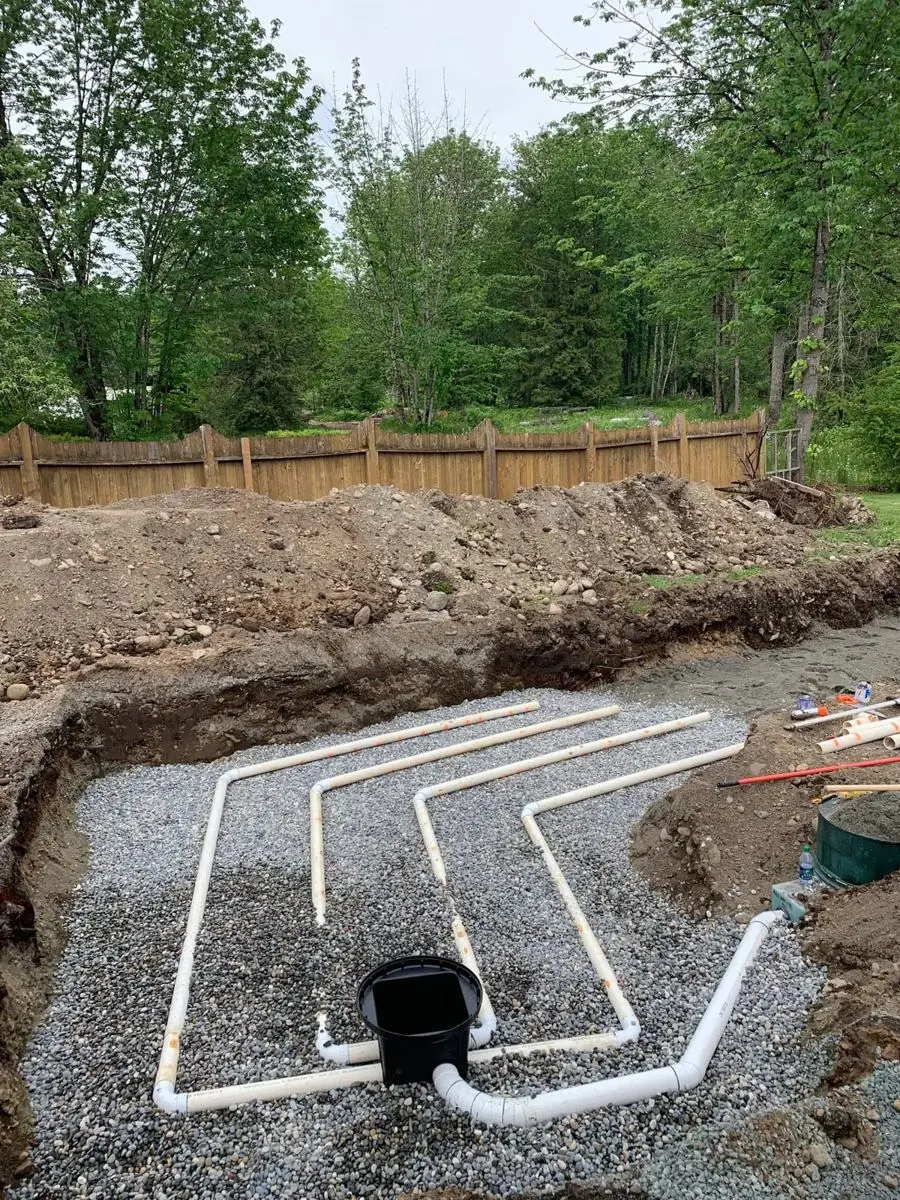
Drain field repair, in short
- What it is: fixing the part of a septic system that spreads treated water into the soil, also called a septic field, leach field or septic bed.
- Wet ground does not always mean a failed field. A blocked line, a tilted distribution box or a pump fault can look the same.
- What we do: find the cause first, then repair lines, connections and the D-box. Replacement is planned only when the field itself has failed.
- Where: Abbotsford, Mission, Chilliwack, Langley, Maple Ridge and the rest of the Fraser Valley and Lower Mainland.
We find the cause first, then repair what has failed: distribution boxes, connections and damaged pipe. If the field itself has failed, we explain the options and plan the replacement with you, including the design it needs.
Signs of a failing septic field or septic bed
- Wet or smelly ground over the field
- Effluent surfacing or repeated backups
- A damaged or uneven distribution box
- Known pipe damage or root intrusion
- An assessment recommending field repair or replacement
- One section of the field is wet or lush while the rest is normal
- Gurgling drains and repeated backups even after pumping
Not sure this is the right service? Start with what you are seeing →
Distribution box (D-box) repair
The D-box sits between the tank and the field and splits the flow between the field lines. When it cracks, settles or fills with roots, one or two lines take most of the water and fail early while the rest sit dry.
Re-levelling or replacing a D-box is a small job compared with a new field, so we check it before anyone talks about replacing the field.
- Locate and uncover the D-box with minimal digging
- Check for cracks, tilt, solids buildup and uneven outlets
- Re-level and clear the box, or replace it with a new concrete or plastic box
- Check each outlet line for flow and for signs of blockage
- Add an access riser so the box can be checked without digging again
What our drain field repair includes
- Go over the system design and maintenance records
- Walk the field and check the distribution box and lines
- Camera and locate lines where it helps find the fault
- Repair damaged pipe, connections and distribution components
- Tell you plainly if the field needs replacing, and what that involves
Warranty. Pumps, level sensors and other parts we supply carry a 3-year limited parts warranty from the day they are installed, matching the manufacturer warranty. If a covered part fails because of a defect in materials or workmanship, it is repaired or replaced at no charge. The warranty covers parts only: labour to diagnose, remove and install is billed at our normal rates. It does not cover damage from flooding, lightning or power surges, freezing, roots, vehicles driven over the system, sand or gravel, grease, wipes or other things that should not go down a drain, or work on the system by anyone else. Full terms are on our warranty page.
Safety first. A buried D-box is shallow but still part of a sewage system. Do not dig it up yourself, and keep children and pets off the area while it is open.
Septic field repair cost: what changes the price
- Existing system condition, records and diagnosis
- Repair extent, access and excavation requirements
- Design, equipment, materials and reinstatement for larger work
You get the price before we start.
Before we look at your septic field
- Existing system records, design and maintenance plan if available
- Safe ground-level photos of wet areas
- History of backups, pumping and component replacements
Septic field questions
Does a wet field mean it must be replaced?
Not always. Pump operation, loading, distribution and pipe condition should be assessed before deciding whether targeted repair or replacement is appropriate.
Can field replacement be done with basic hand tools?
A full replacement is a construction project that needs a site assessment, a design and machinery. We quote and plan it as its own project.
What smaller repairs might be practical?
Levelling or replacing a distribution box, repairing a damaged pipe section, clearing roots and fixing connections. Many problems that look like a failed field are one of these.
Will a camera prove the whole field is healthy?
No. A camera can show accessible pipe conditions, but it cannot by itself establish soil treatment capacity or the performance of the entire field.
How long does a D-box last?
A concrete box can last a long time if it stays level and is not overloaded. Settling soil, frost, roots and heavy vehicles driven over the field are the usual causes of damage.
Can I replace the D-box and skip the field?
If the field is only damaged on the overloaded lines, a new D-box with some line repair can restore flow. If the whole field is saturated, the box is only part of the answer, and we will say so.
Why is the D-box hard to find?
Older systems often have no riser and no records. We use records where they exist and probe the field to find it.
Can a drain field be repaired, or does it have to be replaced?
Often it can be repaired. Broken or blocked lines, a settled distribution box and poor connections are all repairs. Replacement is needed when the soil in the field can no longer absorb water, and we tell you which it is before any digging.
What are the first signs of drain field trouble?
Wet or spongy ground over the field, a sewage smell outdoors, unusually green grass in strips, and drains that slow down after heavy water use. Any of these is worth checking before it becomes a backup.